
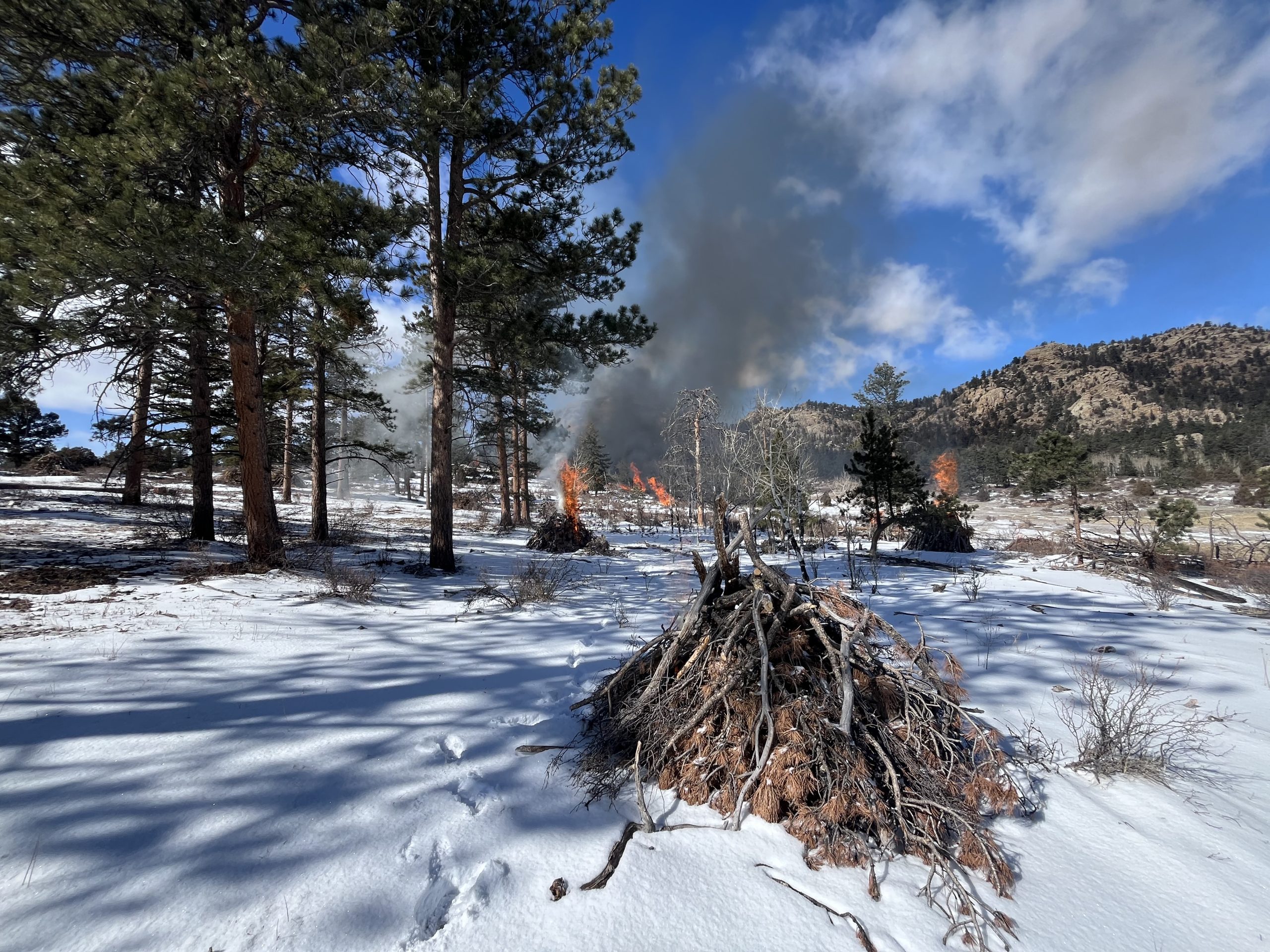
The Crucial Role of Pile Burning in Northern Colorado
Fire is a natural and important part of a healthy Colorado ecosystem. Northern Colorado, with its picturesque landscapes and vibrant communities, is no stranger to wildfire. The region’s unique blend of dry climate, dense forests, and gusty winds creates a perfect storm for wildfires to wreak havoc. In the face of these challenges, Northern Colorado Fireshed Collaborative partners, including land managers, fire agencies and private landowners, use a proactive strategy known as “pile burning” to mitigate wildfire risks and protect both lives and property.
Understanding Pile Burning
According to the U.S. Forest Service, “Pile burning is a type of prescribed fire that helps remove woody debris from the forests, reducing the potential of more impactful, unplanned fire activity at other times of the year. Pile burning helps eliminate branches, limbs, twigs and small logs that can’t easily be removed through other means due to topography, access or cost feasibility. Pile burning typically follows forest thinning projects in overgrown forests.”
By intentionally igniting these piles under controlled conditions, land managers can reduce the overall fuel load in forests, preventing catastrophic fires and promoting ecosystem health.
Is Pile Burning Safe?
Fire managers only burn piles when all approvals are in place and weather conditions are safe. Before burning piles, fire managers track hyper-localized weather forecasts to check temperatures, snowpack conditions and wind. Snow depth and cooler temperatures are key tools in helping contain fire behavior while wind is an important factor in aiding smoke dispersal. Firefighters use air quality monitoring stations in areas where they plan on burning.
Smoke, flames, and glowing embers are often visible, and are a normal part of pile burning operations. Once burning has begun, firefighters patrol and monitor burned piles until there is no longer any heat emitted.
In the winter 2024/2025 season, nearly 38,000 piles were burned in Northern Colorado by federal agencies, local fire protection districts, and county fire departments with contributions
from:
- Larimer County: 180 piles
- Boulder County: 2,082 piles
- Clear Creek County: 121 piles
- Grand County: 1,479 piles
- USDA Forest Service: 34,000 piles

The Benefits of Pile Burning in Northern Colorado
- Fuel Reduction: One of the primary benefits of pile burning is the reduction of fuel sources that contribute to the rapid spread of wildfires. In Northern Colorado, where dense vegetation and deadwood can act as tinder for fires, pile burning is a proactive measure to decrease the risk of large, destructive wildfires.
- Community Protection: Pile burning creates buffer zones around residential areas by eliminating potential fuel sources, effectively acting as a barrier against the encroachment of wildfires. This helps safeguard homes, infrastructure, and the safety of residents.
- Ecosystem Health: Controlled burns mimic natural processes, playing a vital role in maintaining ecosystem health. In Northern Colorado, where certain plant species depend on periodic fires for regeneration, pile burning becomes a tool for preserving biodiversity and ecological balance.
- Enhanced Forest Resilience: By selectively thinning forests and removing excess vegetation through pile burning, land managers contribute to the overall resilience of the ecosystem. This adaptive approach helps forests withstand the impacts of climate change, pests, and disease.
- Air Quality Improvement: Though it may seem counterintuitive, controlled burns actually contribute to improved air quality in the long run. By strategically burning piles under optimal conditions, land managers can minimize the production of harmful smoke and particulate matter, ensuring that air quality remains within acceptable levels.
- Cost-Effective Solution: In comparison to the astronomical costs associated with suppressing large, uncontrolled wildfires, pile burning is a cost-effective strategy. Investing in preventative measures such as controlled burns can save resources and funds in the long term.
In Northern Colorado, where the threat of wildfires looms large, pile burning is an important and proactive strategy for wildfire mitigation. By strategically reducing fuel loads, protecting communities, and promoting ecosystem health, controlled burns contribute significantly to creating a safer and more resilient environment. As the region continues to grapple with the challenges of a changing climate, embracing and expanding the practice of pile burning will be essential in fostering a sustainable coexistence between communities and the dynamic landscapes of Northern Colorado.
Where is Pile Burning Happening in Northern Colorado?
The Arapaho and Roosevelt National Forest, Boulder County Open Space, and Jefferson County Open Space have announced their plans to burn piles in Winter 2025/2026. Other agencies may also announce their plans to burn piles at a later date.
Arapaho and Roosevelt National Forest
- Winter 2025/26 Pile Burning Announcement
- For a detailed list of pile locations across the Arapaho and Roosevelt National Forests, please check InciWeb. See our interactive map for additional information on each of these project locations. This map also includes information on broadcast burn projects, active burns and recent project completions on the Forest.
Boulder County Open Space
Jefferson County Open Space
- Winter 2025/26 Pile Burning Announcement
- 2025/26 Planned Open Spaces: Alederfer/Three Sisters, Meyer Ranch, and White Ranch
Grand County
- Grand Fire Protection District Winter 2025/26 Pile Burning Announcement