
Forged in the NoCo Fireshed: Collaborative Stages of Readiness Framework
Wildfire resilience doesn't happen overnight. Before a prescribed burn is implemented, a forest is thinned, or a community is better prepared for wildfire, years of relationship-building, planning, and coordination have already taken place.
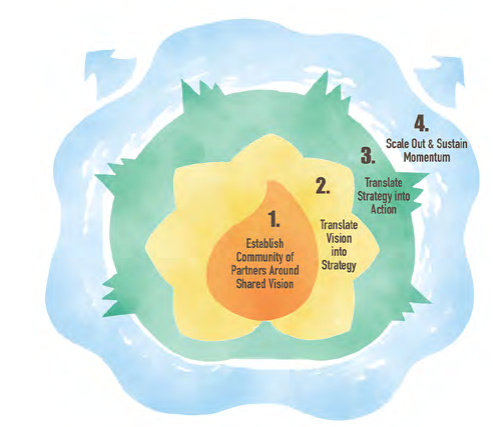
The Northern Colorado Fireshed Collaborative (NCFC) developed the Stages of Collaborative Readiness Framework to recognize that successful wildfire resilience depends on more than projects on the ground—it depends on the strength of the partnerships behind them. Originally developed through work in the NoCo Fireshed and later refined by the Colorado Forest Restoration Institute (CFRI), the Southwest Ecological Restoration Institutes (SWERI), and Colorado State University's Center for Collaborative Conservation, the framework provides a roadmap for how collaboratives grow from new partnerships into long-term, landscape-scale implementation efforts.
Why Readiness Matters
Wildfire does not recognize ownership boundaries. Fires move across federal, state, private, and local lands, making collaboration essential. Yet every community and partnership begins from a different starting point. Some groups are just beginning to build relationships, while others are coordinating prescribed fire and forest restoration across thousands of acres.
Historically, funding has often favored collaboratives with established track records, making it difficult for newer or under-resourced partnerships to build the capacity needed to succeed. The Stages of Collaborative Readiness Framework helps address this challenge by recognizing that collaboratives require different types of support at different stages of development. Rather than measuring success by acres treated alone, the framework acknowledges that relationship-building, strategic planning, and organizational capacity are critical milestones that ultimately enable implementation. (Northern Colorado Fireshed Collaborative)
The Four Stages of Collaborative Readiness
Stage 1: Building a Shared Vision
Every successful collaborative begins with people.
In this stage, partners come together to establish trust, identify shared concerns, understand the local landscape, and create a common vision for the future. Stakeholders may include federal agencies, local governments, fire protection districts, watershed groups, nonprofits, researchers, Tribes, and community members.
While this stage may not produce immediate on-the-ground treatments, it lays the foundation for everything that follows. Strong relationships become the infrastructure that allows future projects to move efficiently and collaboratively.
Stage 2: Turning Vision into Strategy
Once partners are aligned, the next step is developing a shared strategy.
Collaboratives use science, mapping tools, stakeholder engagement, and local knowledge to identify priority areas and coordinate actions across ownership boundaries. Rather than planning projects independently, partners begin working from a common landscape strategy.
Within the NoCo Fireshed, tools such as the PODs Dashboard and Common Operating Picture help partners visualize projects, identify treatment opportunities, align funding, and coordinate restoration work across the entire fireshed. These shared planning tools help ensure that individual projects contribute to broader landscape-scale goals. (Northern Colorado Fireshed Collaborative)
Stage 3: Moving from Planning to Implementation
This is where strategy becomes action.
Partners begin implementing forest thinning, prescribed fire, hazardous fuels reduction, community preparedness, and other wildfire resilience projects. Because the planning has already occurred collaboratively, treatments are more likely to connect across boundaries and create meaningful landscape-scale outcomes.
Importantly, implementation is not the end goal—it's part of an ongoing cycle of learning, adaptation, and coordination. As projects are completed, partners continue evaluating results, improving strategies, and identifying the next priorities.
Stage 4: Sustaining Long-Term Resilience
The highest stage of readiness isn't simply completing projects—it's creating a collaborative that can sustain itself through changing conditions.
At this stage, partnerships have established governance, diversified funding, adaptive management processes, and strong relationships that allow them to continue coordinating work over many years. They are able to respond to new challenges, recover from disruptions, and continually improve while maintaining momentum.
Rather than relying on individual projects or organizations, the collaborative itself becomes resilient.
Readiness Leads to Greater Impact
The Stages of Collaborative Readiness Framework has also influenced how the Northern Colorado Fireshed Collaborative invests in partner capacity.
Early rounds of the Fireshed Fund prioritized strengthening organizational capacity, partnerships, and readiness so that community-based organizations could build the foundation needed for future implementation. As many partners progressed through the readiness stages, more recent funding rounds have shifted toward supporting strategic forest restoration, prescribed fire, and hazardous fuels reduction projects that increase the pace and scale of treatment across Northern Colorado. (Northern Colorado Fireshed Collaborative)
This progression reflects an important principle: investing in collaboration today enables larger, more effective restoration tomorrow.
Preparing for a Future with Fire
The Northern Colorado Fireshed Collaborative believes that wildfire resilience is not measured solely by acres treated or projects completed. It is measured by the strength of the relationships, the quality of collaborative planning, and the collective ability to adapt over time.
By recognizing where communities and partnerships are in their journey—and providing the right support at the right time—the Stages of Collaborative Readiness Framework helps build stronger collaboratives capable of preparing landscapes and communities to live safely with wildfire.
In the end, resilient forests begin with resilient partnerships.