
Types of Forest Treatments
Maximizing our use of fire and other forest management techniques is the most efficient and effective way to increase the pace and scale of treatments needed to tackle the challenge of making our forests healthy and resilient.
Prescribed Fire
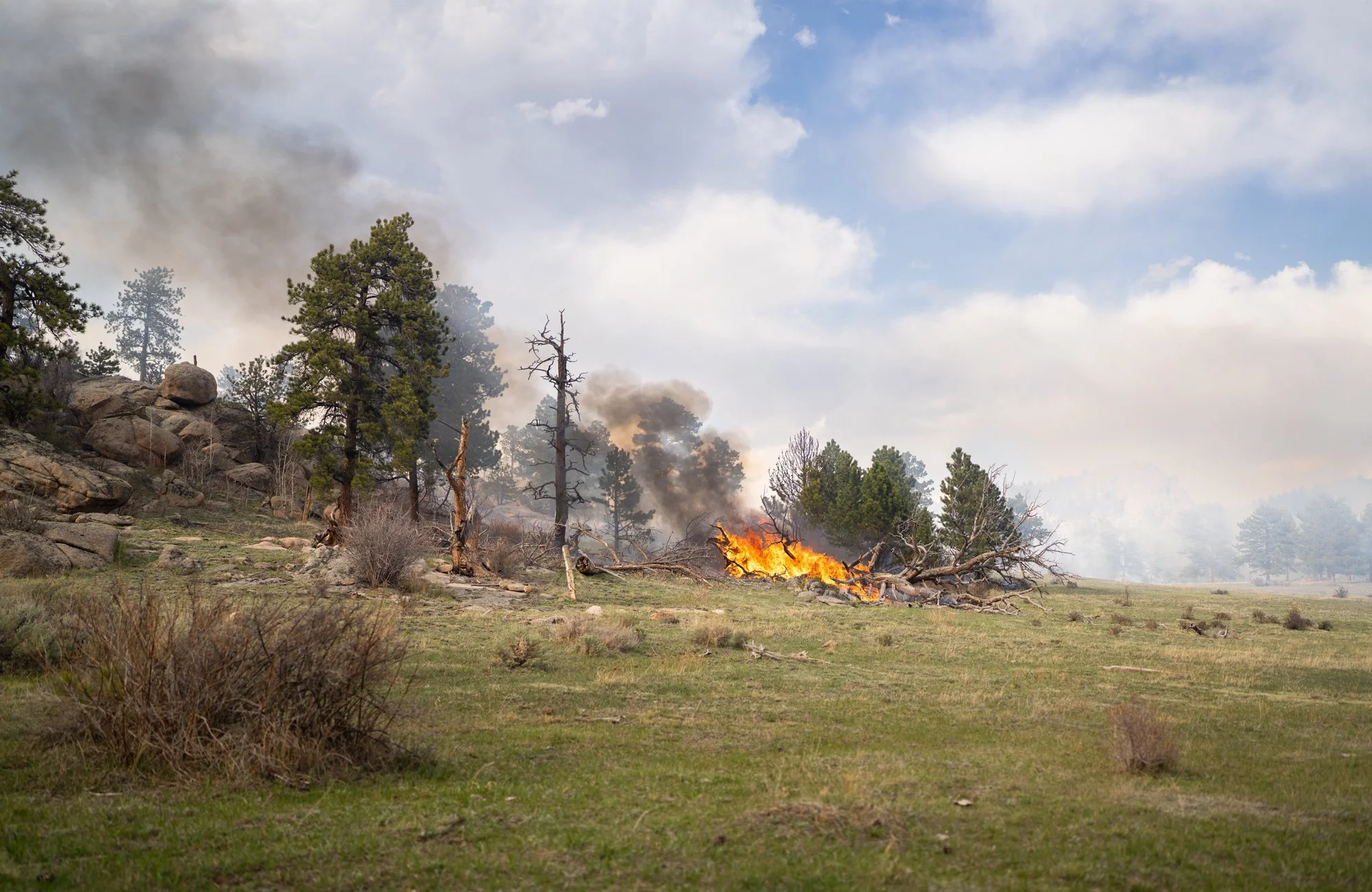
Prescribed fire is a planned fire; it is also sometimes called a “controlled burn” or “prescribed burn,” and is used to meet land management goals.
Benefits of prescribed fire:Improved wildlife habitat – creates diverse mosaic of habitat
Improved recreation opportunities
Reduces wildfire hazards
Reduces forest density – removes surface fuels
Increases opening size and frequency
Regenerates fire-dependent herbs/forbs/shrubs
Increases species diversity
Forest Types: Ponderosa pine, dry mixedconifer, lodgepole pine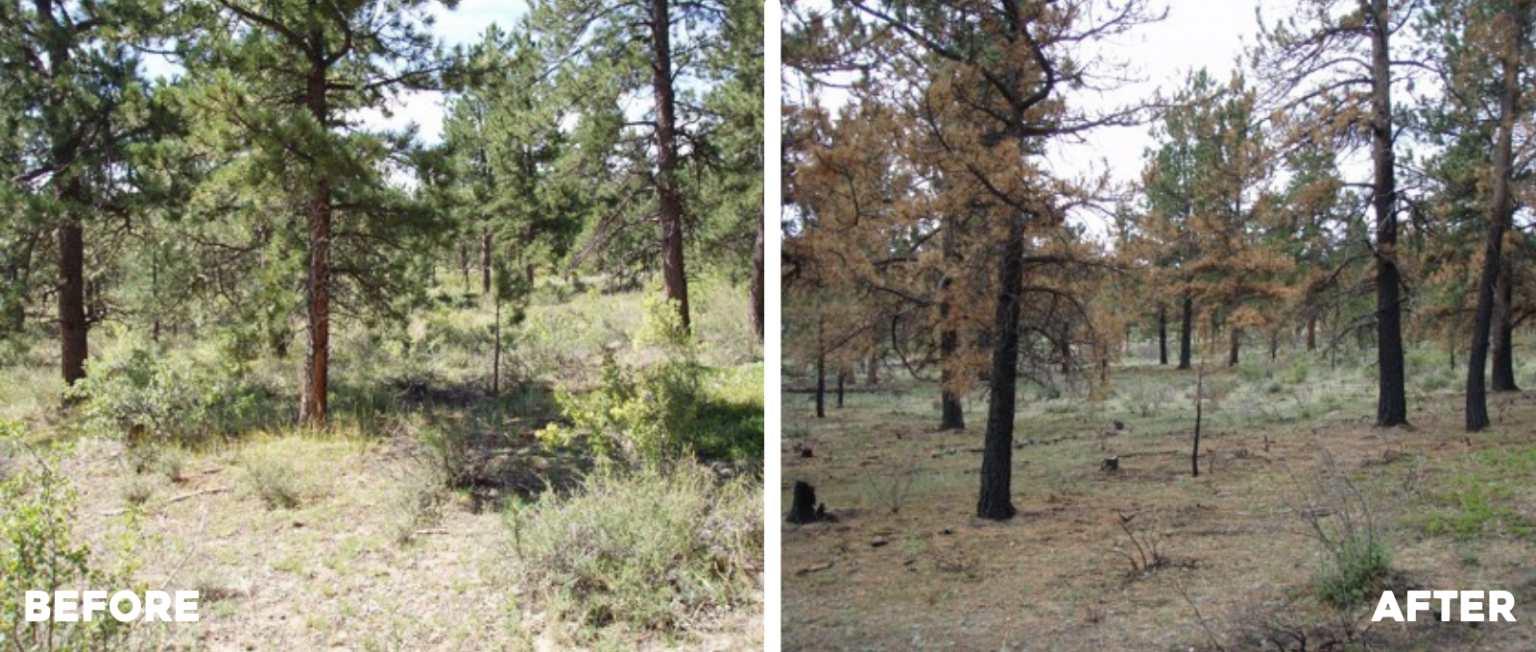
Photo credit: US Forest Service
Hand Thinning
Hand thinning is primarily undertaken to remove small diameter trees (sometimes called ladder fuels) from stands that are too dense.
Benefits of hand thinning:Not limited by terrain that is too steep or inaccessible for mechanical equipment
Improved wildlife habitat
Reduces wildfire hazards
Reduces forest density
Fire behavior modification
Forest Types: Ponderosa pine, dry mixed-conifer
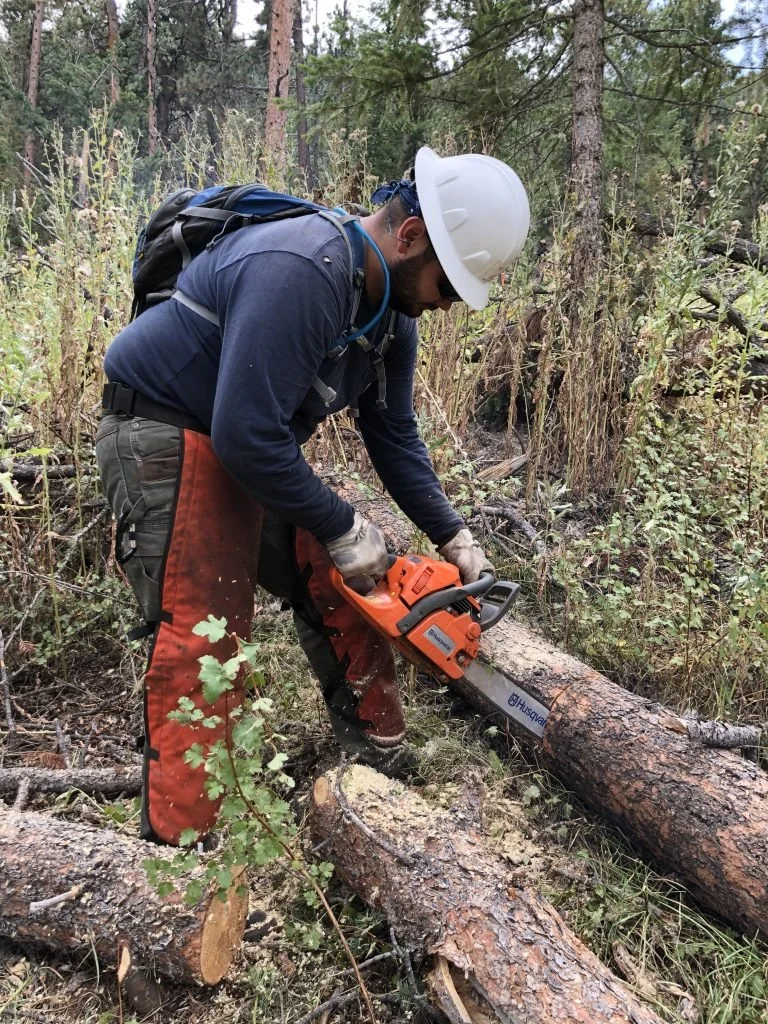
Photo credit: Coalition for the Poudre River Watershed
Mechanical Thinning
Mechanical thinning of forests involves using heavy forestry equipment to greatly reduce tree densities across all size classes, and increase the size and frequency of forest openings.
Benefits of mechanical thinning:Most efficient method to treat large areas of forest and process large volumes of wood
Improved wildlife habitat
Reduces wildfire hazards
Reduces forest density
Increased understory diversity
Forest Types: Ponderosa pine, dry mixed-conifer, lodgepole pine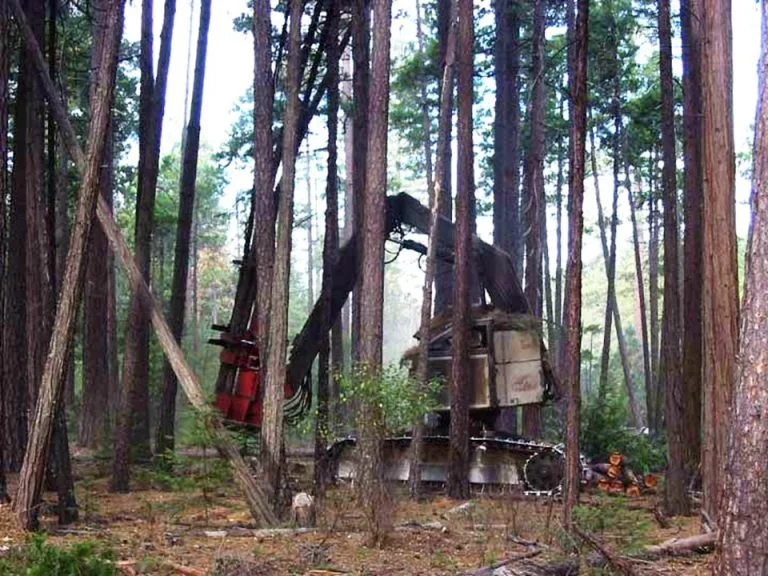
Photo credit: US Forest Service
Mastication
Mastication is a technique where a machine is brought into the forest that can chew up small trees and ground fuels, spitting out 3″-18″ chunks or strips of wood and spreading them over the forest floor.
Benefits of mastication:Reduces wildfire hazards
Reduces forest density
Increases opening size and frequency – provide remaining trees access to more nutrients, sunlight and water
Quick and relatively inexpensive to alter density and arrangement of smaller, hazardous, or unwanted trees and shrubs
Forest Type: Ponderosa pinePhoto credit: US Forest Service
Slash Pile Burning
Piles of woody debris (slash) are burned in an effort to reduce hazardous fuels. These piles are made from slash left after mechanical thinning or hand thinning.
Slash piles can range in size from 6’x6’x6′ for piles stacked by hand to a minimum of 12’x12’x12′ for piles created by machines. Typically piles need to dry out for a year or two before they can be burned. Some piles may be left on the landscape for wildlife habitat purposes.
Certain criteria has to be met in order for these piles to be burned, including smoke dispersal conditions, snow or other precipitation in the burn area, adequate staffing, and fuel moisture. These are all outlined in a burn plan, that is thoroughly reviewed before implementation.
Benefits of pile burning:Reduces wildfire hazards
Reduces forest density
Low potential for escaped fire
Relatively inexpensive and removes unwanted and hazardous trees and shrubs
Forest Type: Ponderosa pine, dry mixed conifer, lodgepole pine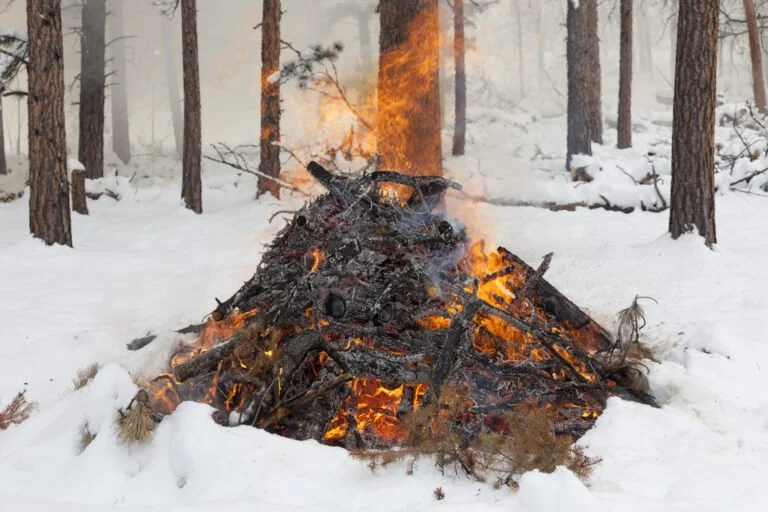
Photo credit: Evan Barrientos/Coalition for the Poudre River Watershed