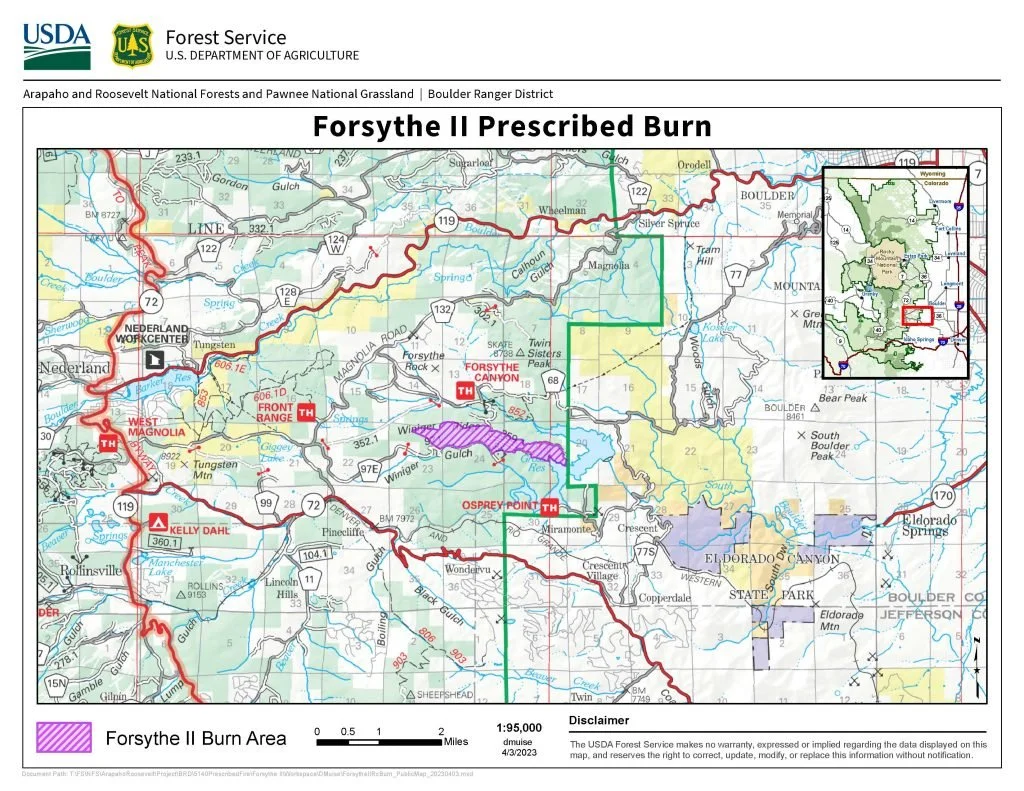
Forsythe II Prescribed Burn
Acres: 18,954 acresAgencies: Arapaho & Roosevelt National Forest, Boulder County, Private Landowners The Forsythe II Project is part of the Forest Service's ongoing effort to improve forest health conditions in the Boulder Ranger District as part of the National Wildfire Crisis Strategy. The project area, located 7 miles southwest of Boulder and 5.5 miles east of Nederland, encompassed 18,954 acres, including 9,940 acres of National Forest System lands, 1,892 acres of Boulder County Parks and Open Space lands, and 7,122 acres of private lands.
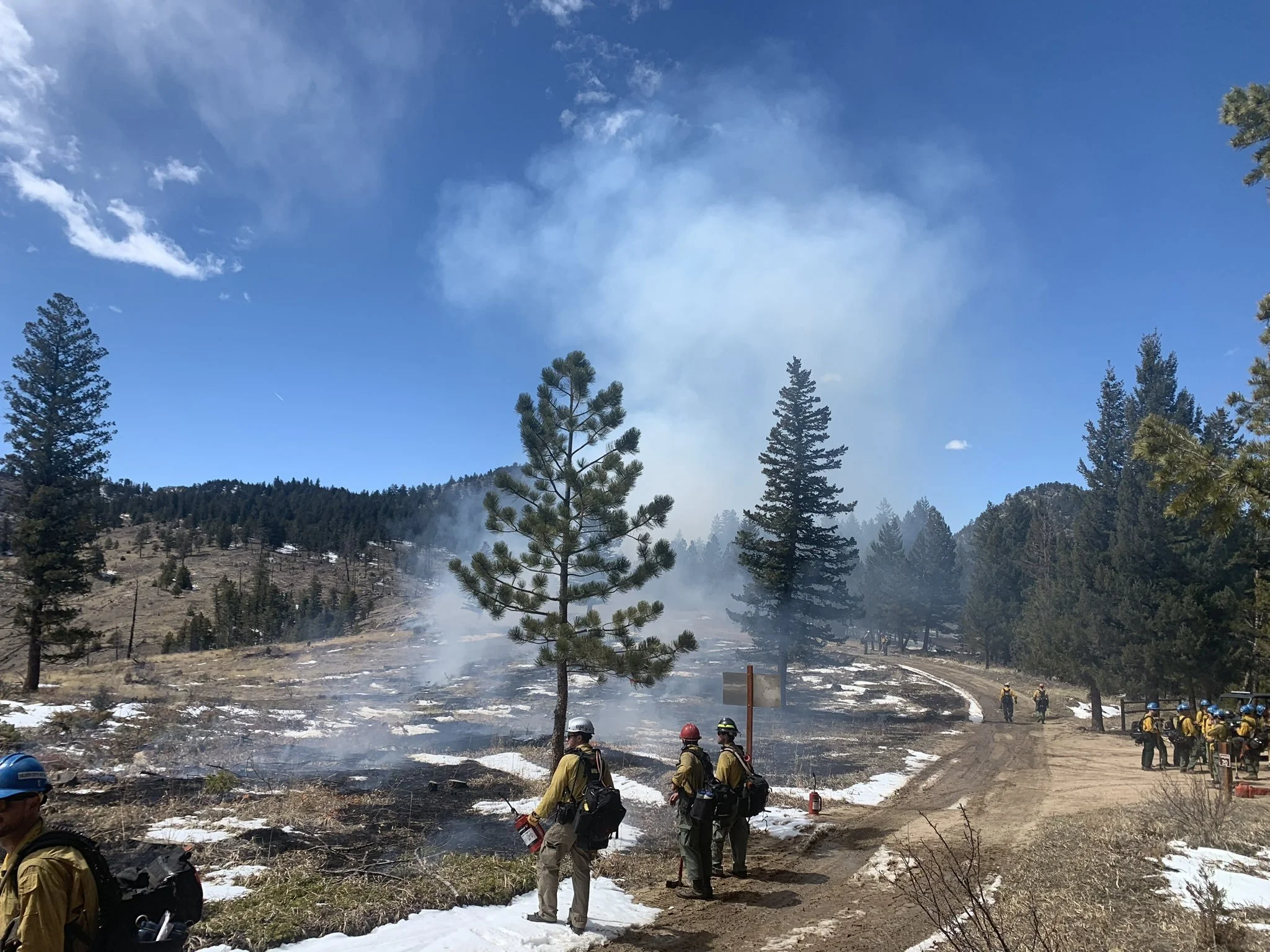
The successful prescribed broadcast burn represented the culmination of many years of planning and preparation. Before fire crews completed this year's broadcast burn at Forsythe II, they carried out cutting, piling, pile burning, and ground fire preparation work throughout the project area. The final step—broadcast burning—used intentionally applied fire to increase the forest's resilience to larger, potentially catastrophic wildfires.
More than 200 personnel supported the project over several months, including local operational support from the Boulder Mountain, Mountain View, Lefthand, Nederland, and Timberline Fire Protection Districts. Additional support came from the Wyoming, San Juan, and Alpine Interagency Hotshot Crews, as well as the Blacktooth, Elk Creek, and Burning Mountain Wildland Fire Modules. The team also worked closely with the Boulder office of the National Weather Service. More than 50 local Forest Service staff supported the operational period.
"With the help of our partners, we were able to successfully implement multiple days of burning on Forsythe II. We capitalized on several good weather windows, which helped ensure a safe and successful burning period. We are proud of the work we accomplished this spring toward a healthier landscape, having increased the resilience to large fires for this forest and watershed," said Ed LeBlanc, South Zone Fire Management Officer.