
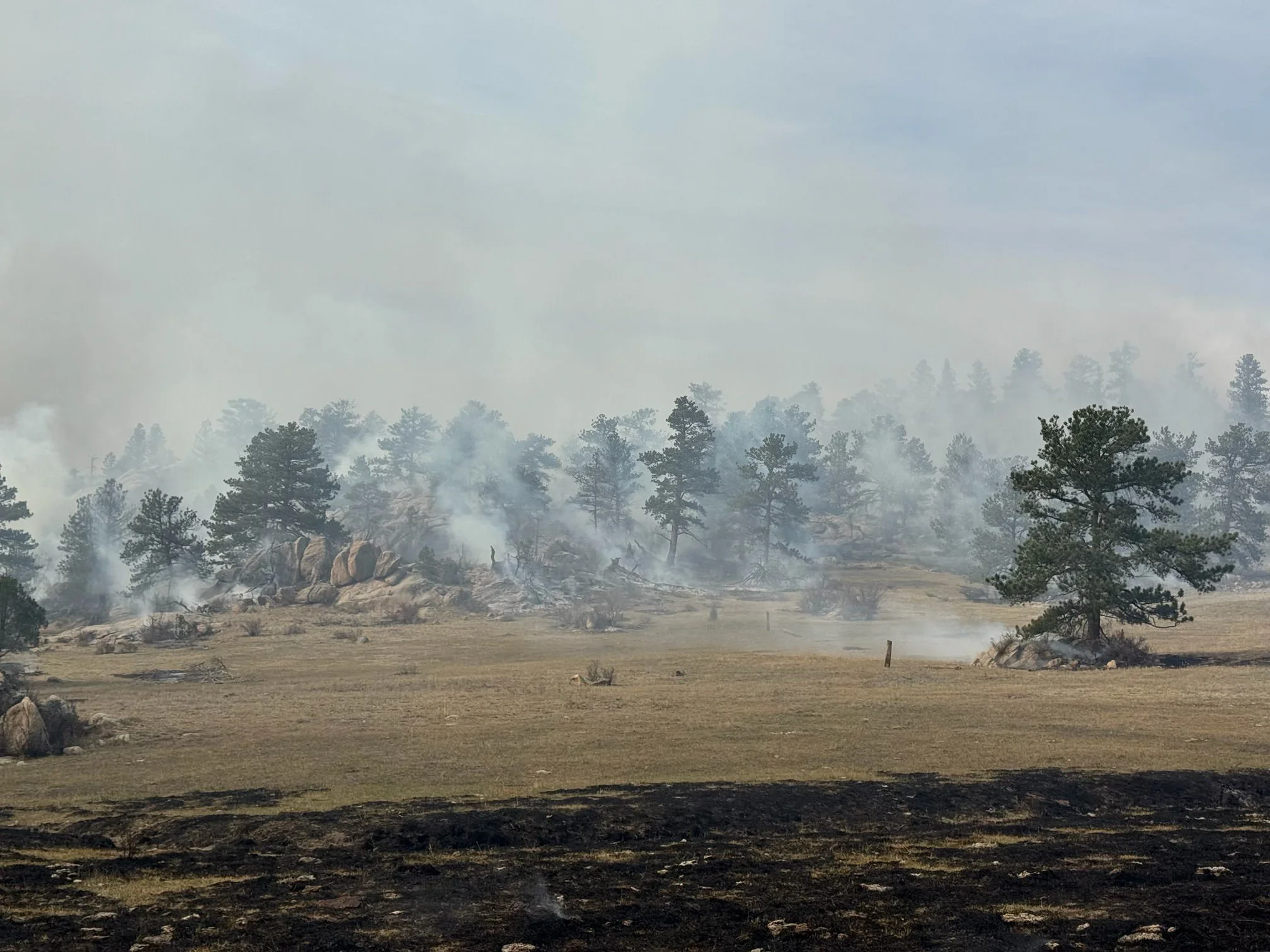
Conditions must align before crews ignite projects that support healthier landscapes, safer communities and reliable water supplies.
Northern Colorado residents could see smoke from multiple prescribed burns over the next week as fire managers look for opportunities to complete planned projects. Potential burns include the Eagle Cliff area in Rocky Mountain National Park, the Salt Cabin project near Rustic, and Marfell Lakes near Lafayette and Erie. Each project depends on a critical combination of suitable fuel conditions, favorable weather and available crews.
Fuel conditions, weather and crew availability must be just right before any ignition can occur. Fire managers evaluate vegetation moisture, wind, temperature, relative humidity, smoke dispersal and forecasts, along with the personnel and equipment needed to conduct and monitor each burn. If conditions do not meet a project’s requirements, ignitions will be postponed or canceled.
Projects being considered include:
Eagle Cliff, Rocky Mountain National Park: The park is preparing to treat a 437-acre area within the Eagle Cliff Unit and portions of the Headquarters Unit, between Beaver Meadows Visitor Center and Bear Lake Road, including areas south of High Drive. The project will reduce grasses, light fuels and understory vegetation to help protect nearby communities and park infrastructure. Burning could begin in late October or later in the winter, depending on conditions. More information.
Salt Cabin, Arapaho and Roosevelt National Forests: The project is located approximately two miles southeast of Rustic, south of the Cache la Poudre River. Planned burning will reduce accumulated vegetation and other fuels, supporting forest health and efforts to prepare communities, watersheds and infrastructure for future wildfire. Smoke may affect the Colorado Highway 14 corridor. More information.
Marfell Lakes, Boulder County: Additional burning near Arapahoe Road and 119th Street, in the Lafayette/Erie area, is tentatively scheduled for Oct. 26–Nov. 1. This project targets cattails to improve lake capacity. The south lake portion was completed Oct. 23; remaining work depends on suitable conditions. More information.
These projects illustrate the different ways prescribed fire supports the stewardship of Northern Colorado’s landscapes. In forests, carefully planned burns remove accumulated fuels and help maintain fire-adapted ecosystems. Around agricultural water infrastructure, prescribed fire can manage vegetation and improve water conveyance and capacity.
For the Northern Colorado Fireshed Collaborative, increasing opportunities to use prescribed fire is central to creating resilient landscapes. The NoCo Fireshed brings partners together across ownership and jurisdictional boundaries to increase the pace and scale of forest management, including thinning and prescribed fire, to protect communities and the watersheds they depend on.
Residents and visitors should follow updates from the agency managing each project for ignition announcements, smoke information and temporary closures. Smoke may remain visible after active ignitions end, and crews will continue monitoring burn areas.
Smoke
Residents and visitors may experience smoke during prescribed burns. Prescribed fire smoke may affect your health. For more information, visit wood smoke and your health. For live smoke updates visit: https://colosmokeoutlook.blogspot.com