Prescribed Fire Common Terminology
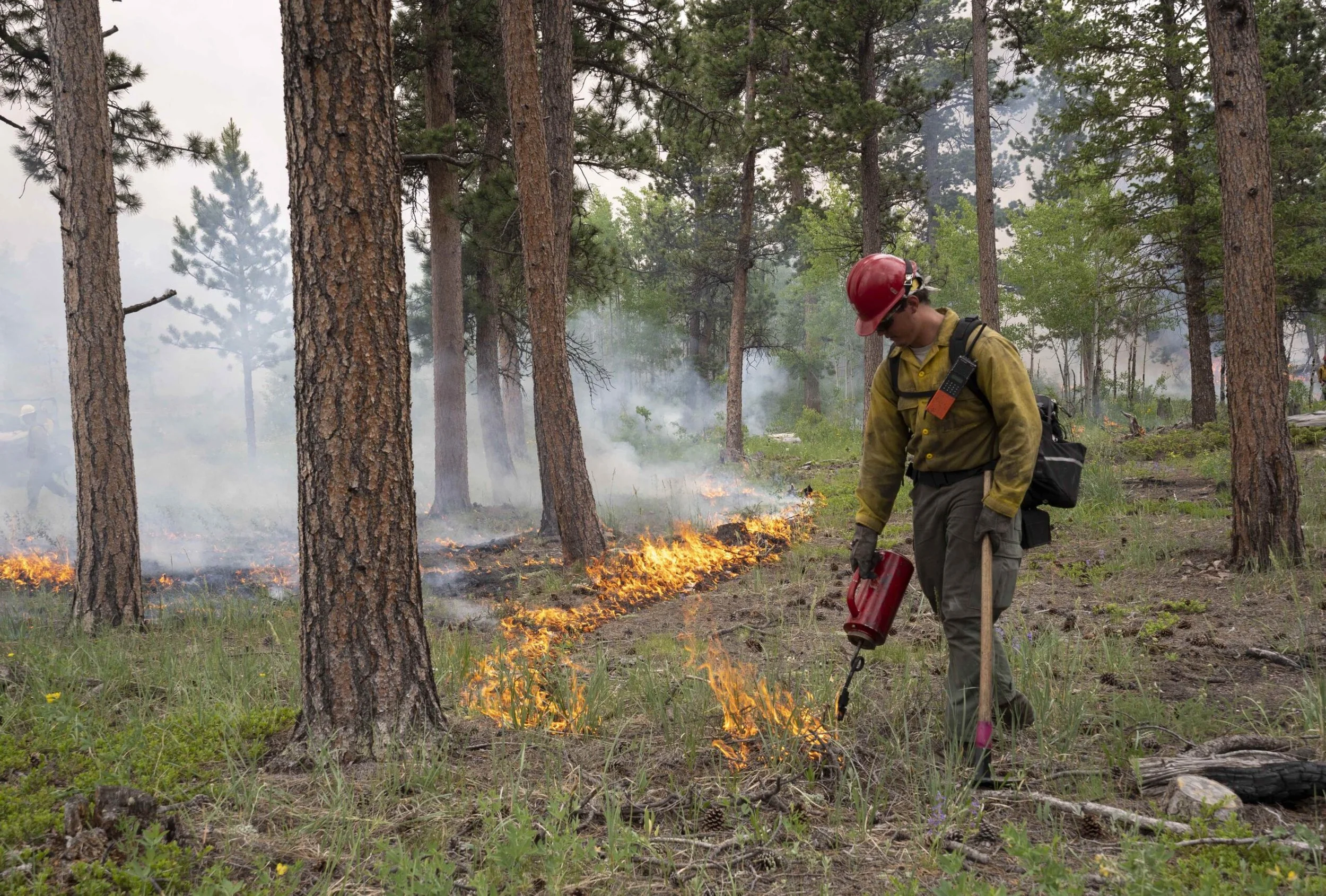
Photo: Evan Barrientos
Prescribed Fire: Any fire ignited by management actions under certain, predetermined conditions to meet specific objectives related to hazardous fuels or habitat improvement. A written, approved prescribed fire plan must exist, and NEPA requirements must be met, prior to ignition.
Prescribed Fire Plan (Burn Plan): This document provides the prescribed fire burn boss information needed to implement an individual prescribed fire project.
Prescription: Measurable criteria that define conditions under which a prescribed fire may be ignited, guide selection of appropriate management responses, and indicate other required actions. Prescription criteria may include safety, economic, public health, environmental, geographic, administrative, social, or legal considerations.
Fire Weather: Weather conditions that influence fire ignition, behavior and suppression.
Test Fire: A small fire ignited within the planned burn unit to determine the characteristic of the prescribed fire, such as fire behavior, detection performance and control measures.
Surface Fuels: Loose surface litter on the soil surface, normally consisting of fallen leaves or needles, twigs, bark, cones, and small branches that have not yet decayed enough to lose their identity; also grasses, forbs, low and medium shrubs, tree seedlings, heavier branchwood, downed logs, and stumps interspersed with or partially replacing the litter.
Ladder Fuels: Fuels which provide vertical continuity between strata, thereby allowing fire to carry from surface fuels into the crowns of trees or shrubs with relative ease. They help initiate and assure the continuation of crowning.
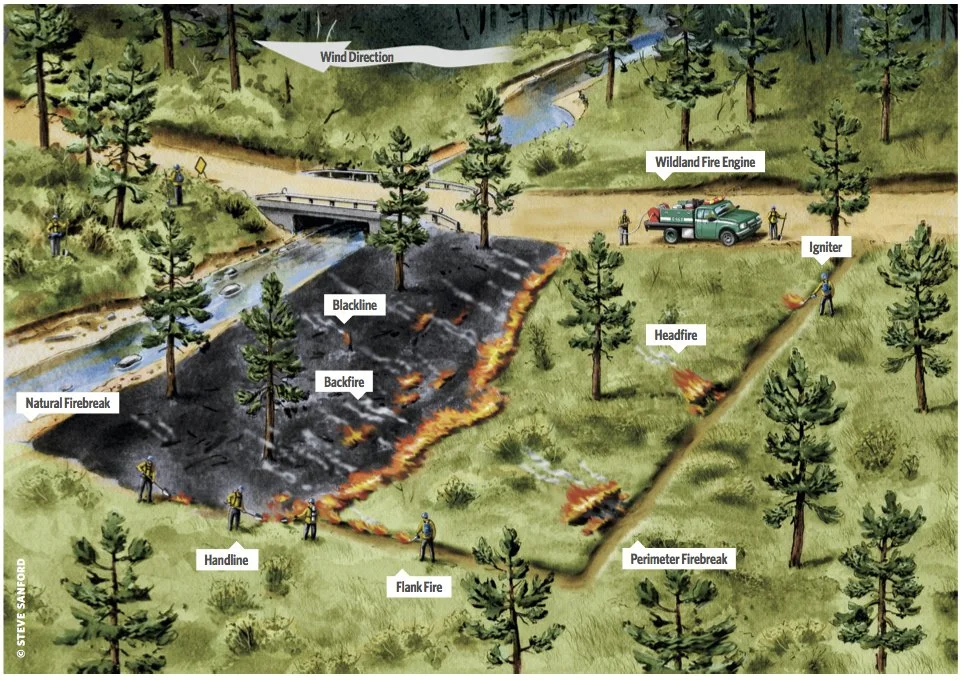
Control Line: All built or natural fire barriers and treated fire edge used to control a fire.
Hand Line: A fire line built with hand tools that is scraped or dug to mineral soil.
Drip Torch: Hand-held device for igniting fires by dripping flaming liquid fuel on the materials to be burned; consists of a fuel fount, burner arm, and igniter. Fuel used is generally a mixture of diesel and gasoline.
Slop-over: A fire edge that crosses a control line or natural barrier intended to contain the fire.
Spotting: Behavior of a fire producing sparks or embers that are carried by the wind and start new fires beyond the zone of direct ignition by the main fire.
Torching: The ignition and flare-up of a tree or small group of trees, usually from bottom to top.
Mop-up: To make a fire safe or reduce residual smoke after the fire has been controlled by extinguishing or removing burning material along or near the control line, felling snags, or moving logs so they won't roll downhill.
Escaped Fire: A fire which has exceeded or is expected to exceed initial attack capabilities or prescription.